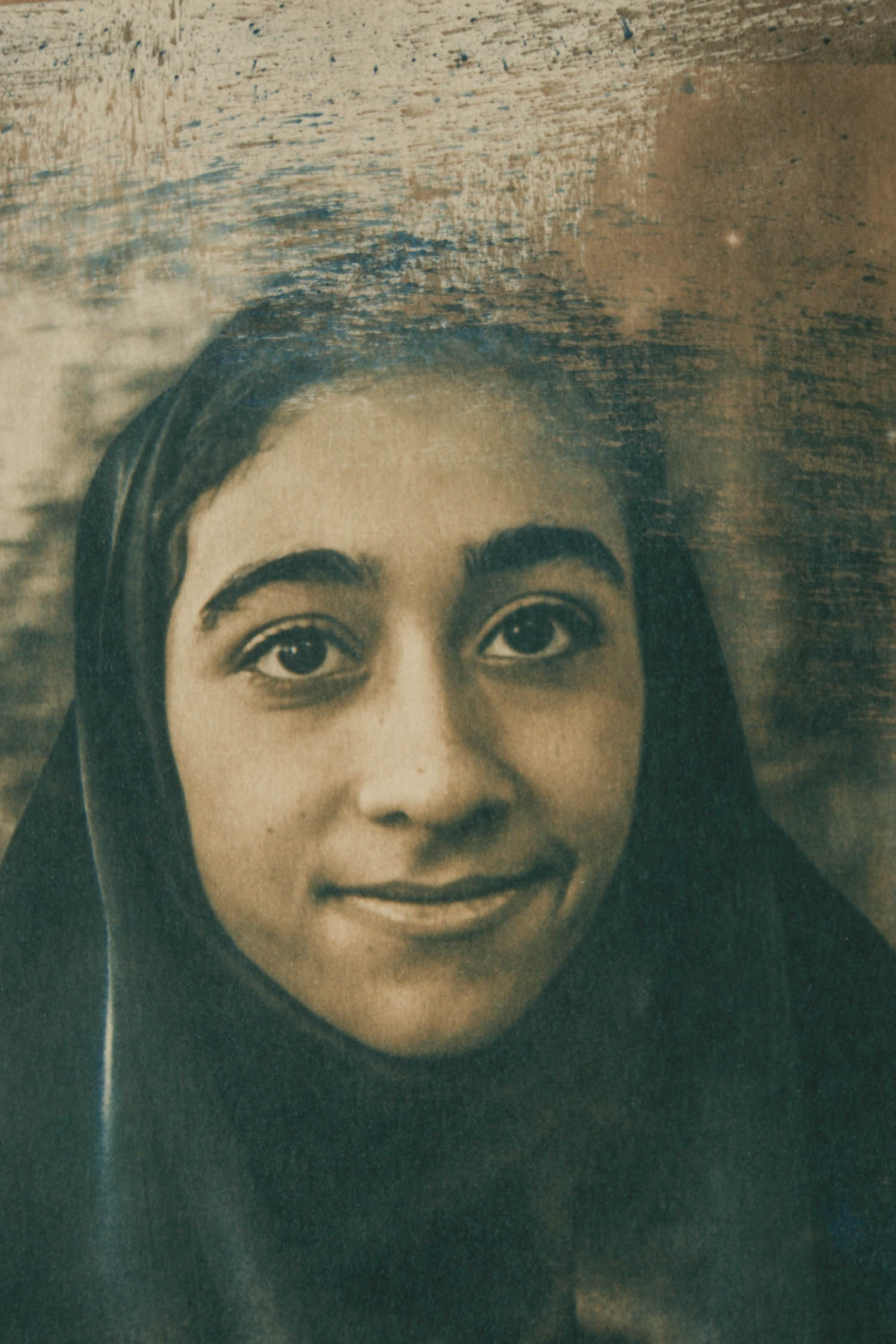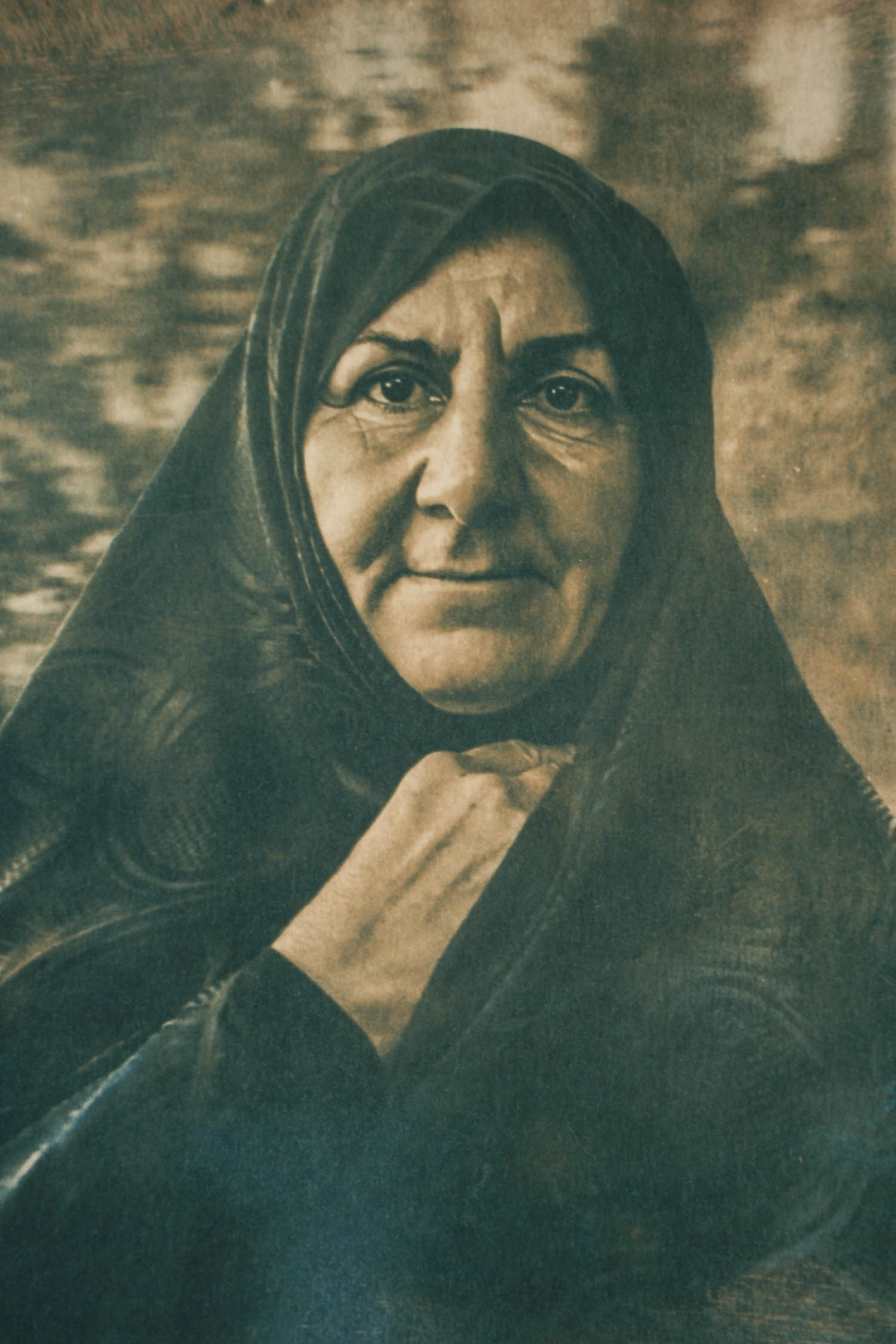
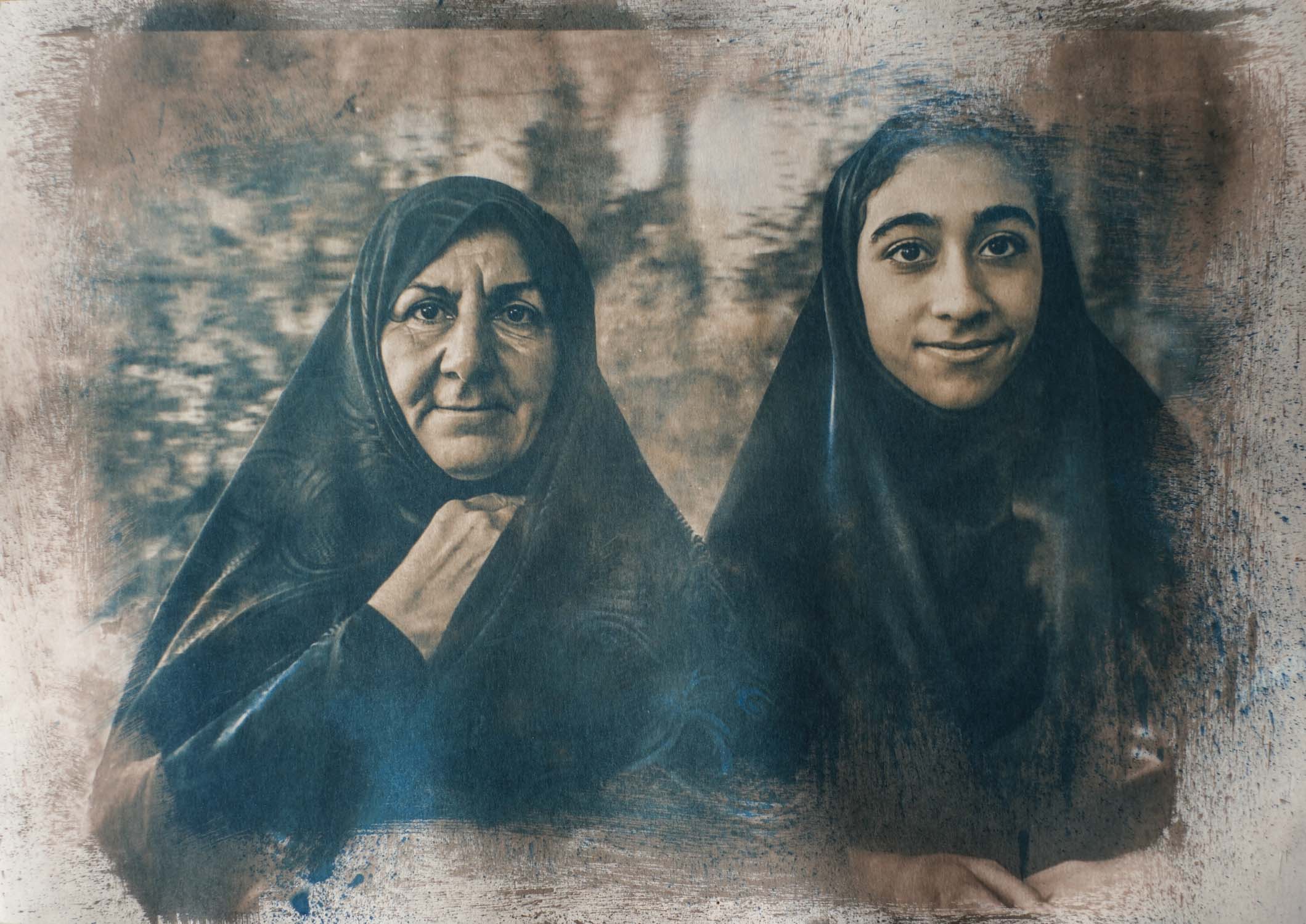
That is the story of my newest cyanotype from Iran
The crowd is swelling around me. It’s the first day of Ashura in Kashan – the most important holiday for Shias. I have my camera tucked under my jacket, pulling it out only for a quick snap. I think I’m being clever. I tell myself no one will notice me, that in my cargo pants, I’ll just blend into the sea of women dressed in black chadors. Smart me! Suddenly, a girl and her mother approach me.
“Where are you from?”
“Poland.”
“I saw you have a camera. May I see it?”
I take it out and show her. The girl turns it over in her hands.
“It looks like a very good one.”
“Yes, it’s quite decent,” I reply, a bit nervous about where this conversation is headed.
“Then please, take a lot of photos. Show the world that we are not savages.”
Ashura in Kashan
I had arrived in Kashan a day earlier by bicycle. I was accompanied by Natasha – a typical North Tehran resident: blasé, decadent, a passionate reader of poetry, and a member of a Sufi order. Even the evening before, the city was already buzzing in preparation for the first day of Ashura. Lanterns lit up the streets like Christmas back home. Stands were set up everywhere, with tea being poured for anyone who asked from massive jars. For free. Every few moments, the doors of private homes would swing open, and hosts would hand out food to passersby. For several weeks already, food had been distributed in mosques at noon. I ate there myself more than once. Usually, the boldest woman in the room would pull me into the mosque, sit me down on the ground, and hand me a plate piled high with food, while other women would gather around, sharing stories and laughter.
The Battle of Karbala
The Shia Ashura commemorates the Battle of Karbala in 680 AD. It was a clash between the Umayyad forces – numbering anywhere from 4,000 to 100,000 soldiers – and the party of Hussein, the grandson of the Prophet Muhammad, which consisted of only 70 to 150 people, including women and children. Just days before, Hussein’s troops had been larger, but many simply left upon hearing of the massive army awaiting them.
Hussein stood no chance. He was killed, along with all the men and boys over the age of six. Only the women and girls survived. Even they were denied food and water on their way to Damascus. Only a handful made it. It is thanks to them that the memory of the Battle of Karbala lives on.
Celebration of Ashura
Shias believe that Hussein’s blood is on their hands and that their souls bear the stain of betrayal. Thus, Ashura is not only a time of mourning but an attempt to atone for the sins of their ancestors. Through self-flagellation, they perform penance. In memory of the captives being denied water and food, every Shia is obligated to give out food and offer water or tea during Ashura. Iranians also keep their pockets full of candies to give to children—and to “phenomena” like a Polish girl on a bamboo bike.
Cyanotype from Iran
Natasha left for Tehran, and I stepped out onto the street with my heart in my mouth. A moment later, I met those two women from the cyanotype. After our conversation, I stopped avoiding the crowds. I took photos just like the Iranian women did. Because everyone was taking photos. Everyone was taking photos of me, too. I took photos of them. Someone offered me a treat, someone invited me into their home. If someone didn’t strike up a conversation, they at least smiled. I ended up staying in Kashan for four days…