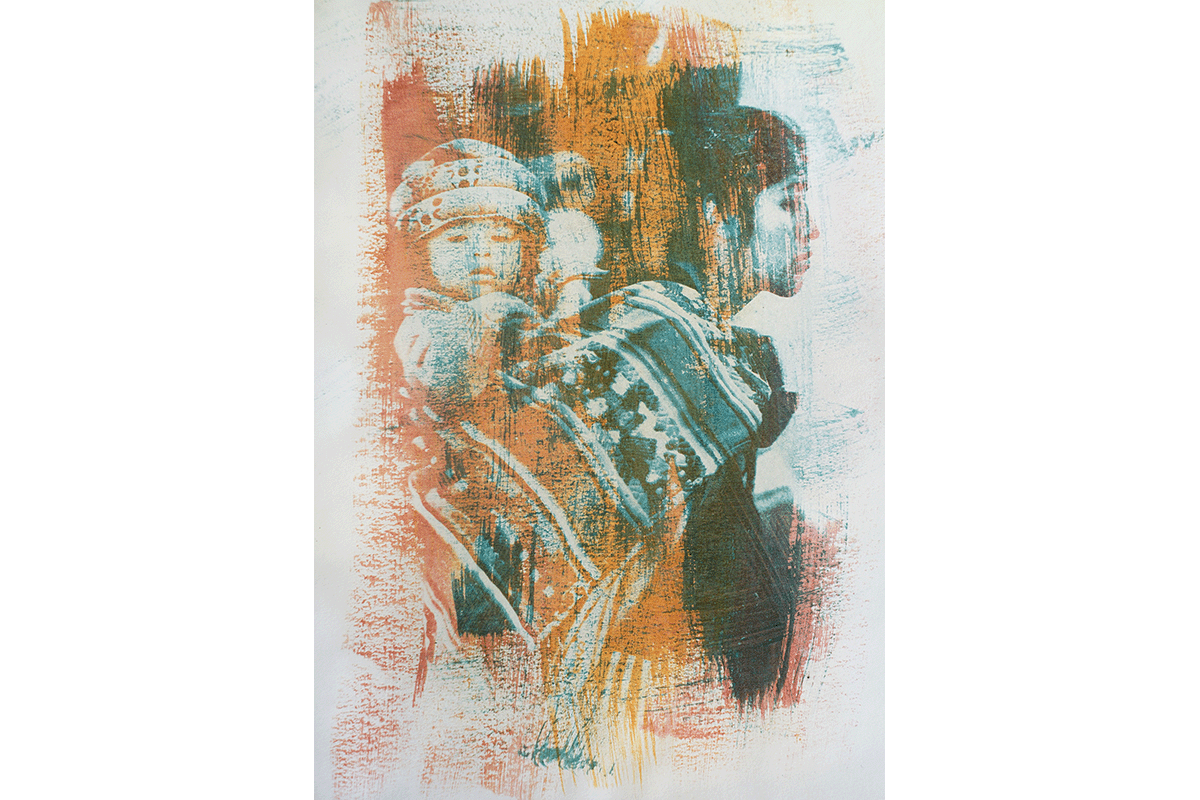
Here is a combination of 19th-century chemistry, cottage cheese, and the core logic of gum bichromate. Sounds out of this world? Only at first. This is a unique take on Chiba system photography—an alternative photographic method where a mixture of casein and ferric ammonium citrate (FAC) acts as the light-sensitive agent.
An Incan Madonna in Casein: Exploring Chiba System Photography
But wait, this mixture is completely colorless. How do you make it visible? By adding artists’ pigments. And that is exactly how this casein print of an Incan Madonna came to life.
I met the girl in Cusco. She was standing helplessly in a square near the market entrance, while crowds of Peruvians and tourists rushed past her, caught up in a shopping frenzy. The girl did not belong to that world. She stood there like a monument, posed like a votive sculpture from the Yoruba Changa cult in Africa. Classic. Except she wasn’t carved from ebony—she was alive. Flesh and blood.
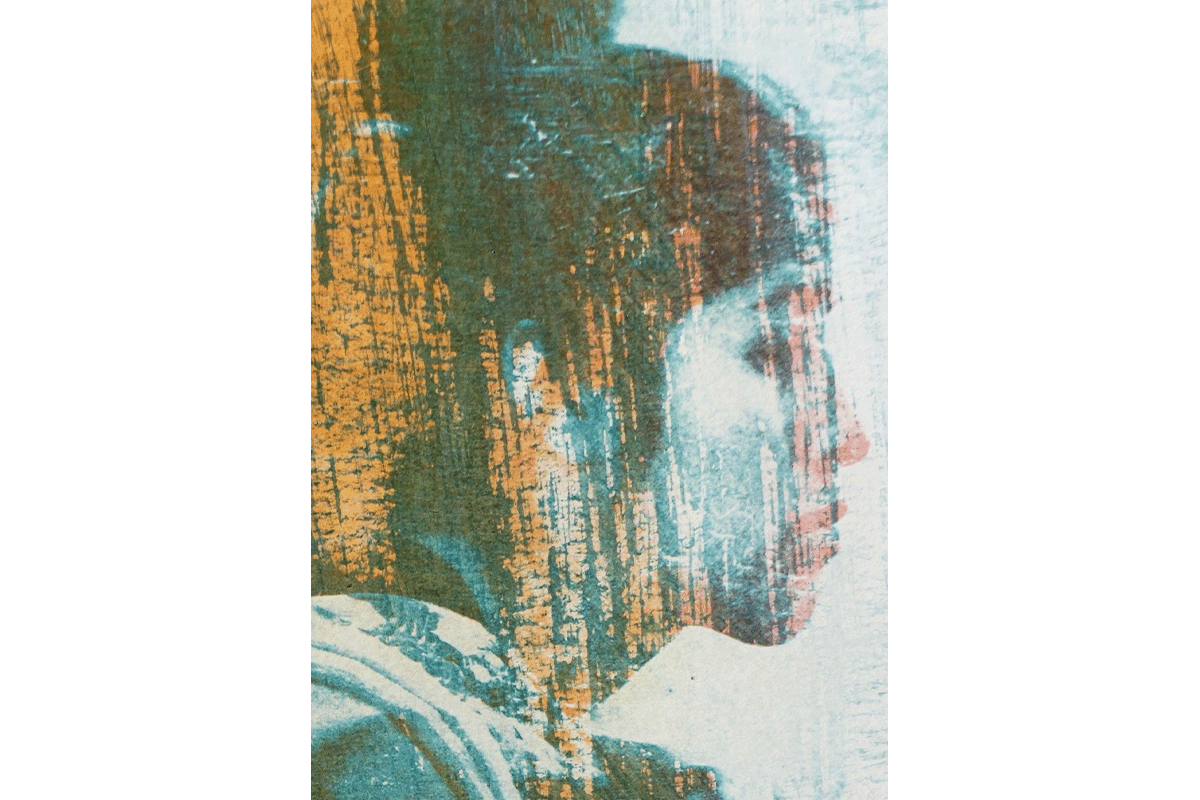
Getting Creative with Chiba System Photography
Which of the historic photographic techniques is your favorite? My personal number one has always been gum bichromate. It is a solution based on gum arabic, potassium bichromate, and added pigments. The bichromate makes the whole process toxic. Oh, highly toxic… On top of that, gum arabic is a very fickle medium. If you don’t expose it immediately after coating the paper, things go wrong. Casein is different; it offers several major advantages. You don’t have to rush. The emulsion itself exposes faster and can hold much more pigment.
Okay, but classic casein print is still toxic because of the potassium bichromate. This is where students from Chiba University in Japan came to the rescue. They revolutionized alternative printing by discovering that potassium bichromate can be replaced with ferric ammonium citrate (FAC)—the exact same chemical I use in cyanotype! This non-toxic breakthrough laid the foundation for modern Chiba system photography.
Will it work if I mix it with casein? Yes, it did! However, it took me a long time to develop my own formula because I kept messing things up. Once I mixed up the units of measurement on my scales, and another time I misplaced a decimal point and used ten times more of one ingredient than needed. But since ferric ammonium citrate is practically fool-proof, whatever I did, it still worked out…
Well, I finally focused and figured it out. You can find the exact recipe for this type of Chiba system photography in this post: on cyanotype.art
Leave a comment if the recipe worked for you. Keep in mind, though, that I live where I live—so the water I use is definitely different from yours. Plus, the chemicals from my supplier might vary from yours.
Leave a comment if the recipe worked for you. Keep in mind, though, that I live where I live—so the water I use is definitely different from yours. Plus, the chemicals from my supplier might vary from yours.
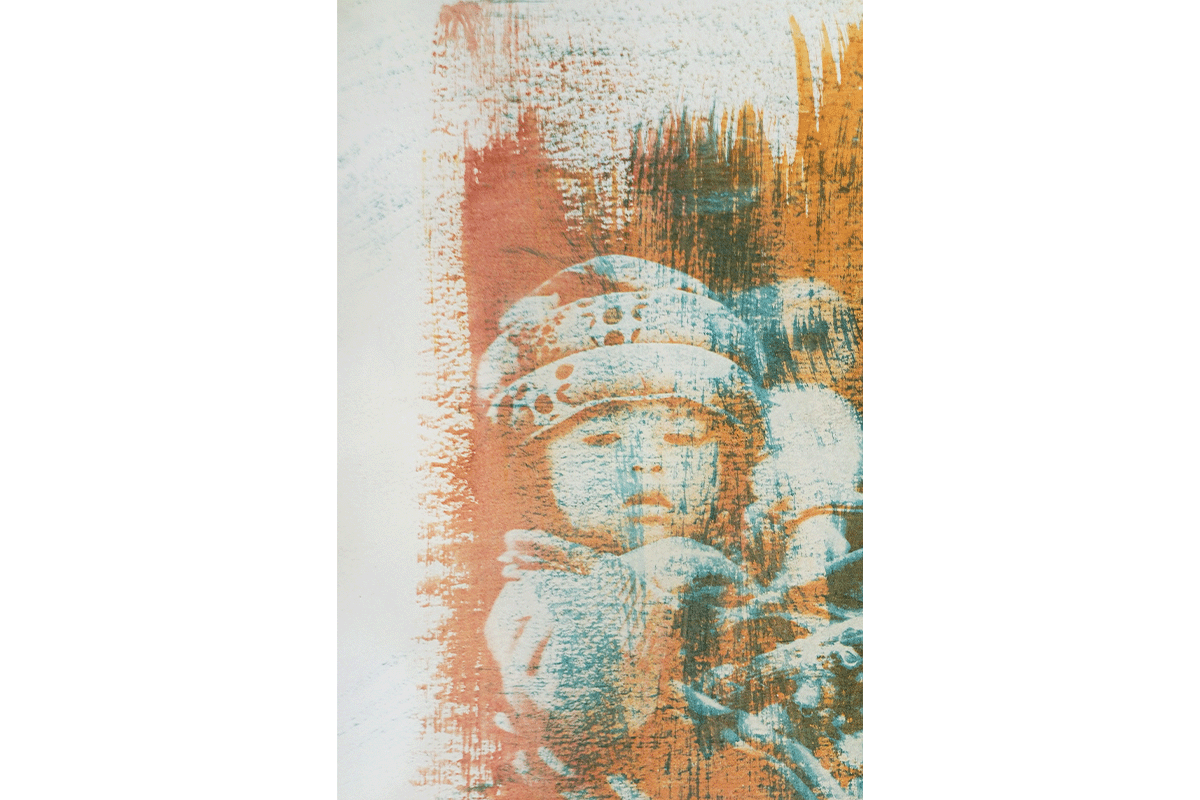
Where to Get Casein
Traditionalists of alternative processes extract casein from low-fat cottage cheese (twaróg) combined with ammonia water. The ammonia dissolves the casein, creating a thick, sticky glue. That’s the theory. In practice, however, I simply don’t want to waste my time on such maneuvers.
I actually bought my casein completely by accident some time ago. I needed an acrylic medium for fluid art, so I went to an art supply store and asked for a medium. As luck would have it, the only medium they had was a casein-based one. After mixing it with acrylics, it turned into an epic, curdled glob, so I decided not to pursue that path. I read somewhere that casein is used for painting icons. Hmm. My mom wants to paint icons. I thought, I’ll sell her the bottle because it was just taking up space in my fridge. Unfortunately, my mom showed zero enthusiasm, and I was stuck with the bottle. Until I saw a casein print. Since then, I have been a regular consumer of casein.
Back to the Incan Madonna
I decided to sell the piece on Singulart. Except… I accidentally damaged it! I was left with a photograph of the print, and a damaged physical artwork that was completely unfit for sale. Doing a remake was out of the question—in this technique, it is impossible to create the exact same print twice.
That’s when it hit me to make a giclée fine art print of it. Good idea. What if I enlarge it too? That idea really appealed to me. I prepared the file and printed it in a 50×70 cm format. In my opinion, it turned out even better than the original. If you are interested in purchasing one of the 5 limited edition prints I made, I invite you to visit Singulart.
How do you like this artwork? Head over to my Singulart profile and let me know what you think of my work! Or perhaps you would like to see one of them on your own wall? Please let me know in the comments!